The Quiet Evolution of OOH
Out-of-Home advertising has always been one of the most powerful mediums in marketing.
Billboards dominate skylines.
Digital screens illuminate city centres.
Transit advertising moves with people through their daily lives.
In fact, OOH has remained one of the most trusted and memorable forms of advertising for decades.
But in 2026, the smartest brands aren’t asking whether OOH works.
They’re asking a slightly different question:
Where does OOH work best?
Because while reach matters, the environment matters just as much.
Where Attention Actually Lives
Think about a typical city journey.
A passenger sits in the back of a taxi travelling across Manchester, London, or Southampton.
For 15–20 minutes, they’re not rushing through a shopping centre.
They’re not power-walking through a station.
They’re simply travelling.
That creates something rare in modern marketing:
undistracted presence.
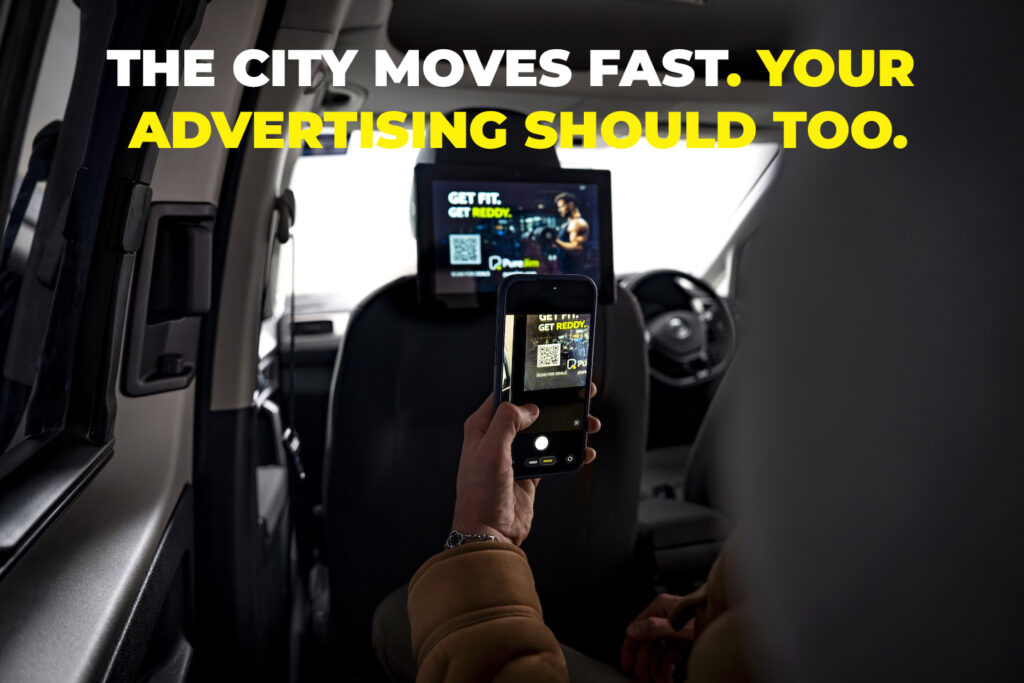
This is exactly where Digital Out-of-Home (DOOH) inside taxis is starting to gain serious attention from agencies and brand teams.
Passengers naturally look forward.
The screen sits directly in their eyeline.
And the brand message becomes part of the journey.
Not forced.
Just present.
Why Big Brands Are Paying Attention
Major brands and media planners are increasingly exploring urban mobility DOOH networks because they offer something that complements traditional OOH placements perfectly.
Billboards create scale.
Taxi DOOH creates proximity.
Together, they reinforce brand presence across multiple moments of the same consumer journey.
It’s not about replacing anything.
It’s about strengthening the ecosystem.
The Hidden Advantage of Taxi Advertising
Taxi environments are unique because they combine several powerful elements:
• High dwell time exposure
• Urban commuter audiences
• Business traveller visibility
• Premium in-vehicle screen placement
And because journeys often last 15–20 minutes, brands gain something impressions alone can’t always deliver:
time with the audience.
Closing Thought
OOH advertising will always dominate city landscapes — and that’s exactly why it works.
But sometimes the most effective opportunities aren’t the loudest ones.
They’re the ones sitting quietly inside everyday moments.
Next time you’re travelling across a city in a taxi, take a quick look around.
You might just notice where the future of DOOH is heading.
And if you’re curious about how brands are already using this space, we’re always happy to share what’s happening across our network.
No pressure.
Just a conversation worth having.