In Taxi Digital Advertising for Engaged Passengers
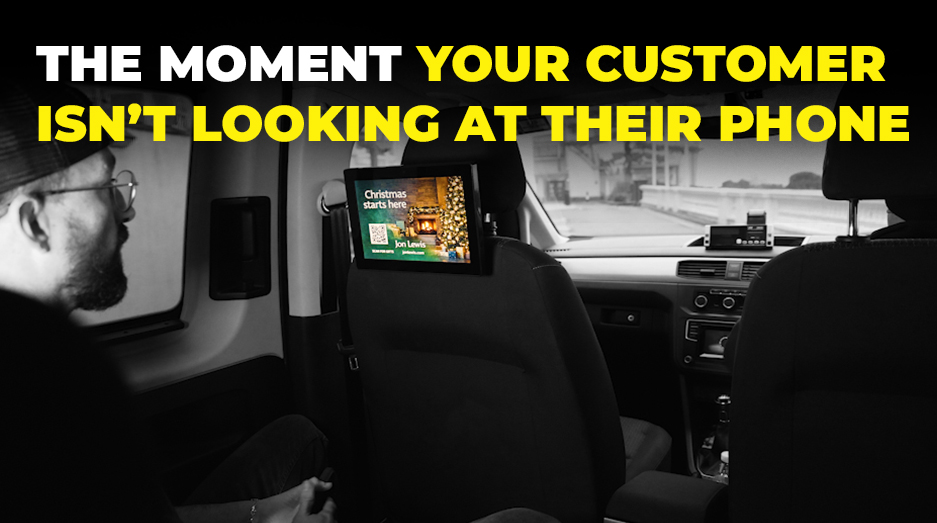
In taxi digital advertising for engaged passengers gives brands access to something increasingly difficult to find: a calm moment with an audience that is no longer
Here’s a strange thought.
There are still moments in the day when people aren’t looking at their phones.
Shocking, we know.
They’re rare, but they exist.
And some of those moments happen in the most ordinary place imaginable: the back seat of a taxi.
Advertising in 2026 faces a very simple challenge.
Everyone is busy.
Consumers move between screens, apps, conversations, and notifications all day long. Attention is fragmented, fleeting, and harder to capture than ever before.
Which means brands aren’t just competing with other advertisers anymore.
They’re competing with everything.
But every now and then, daily life creates a pause.
And those pauses are where brands quietly make their biggest impact.
Recently, a well-known global expert in taxi transport and taxi media shared an interesting observation.
They pointed out something that tourism boards and destination marketers often overlook:
Some of the most powerful moments in destination marketing happen while travellers are moving between places.
With 30–45 minutes often spent in licensed taxis between airports, hotels, and meetings, travellers experience a rare moment of stillness — a perfect opportunity for destinations and brands to share their story while attention is naturally focused.
And during that journey, something interesting happens.
Passengers sit.
They pause.
And they often start thinking about what to do next.
As the expert explained, that quiet moment of stillness — when someone is deciding their next move — can be one of the most powerful places for a brand or destination to tell its story.
Urban taxi journeys are surprisingly powerful media environments.
Passengers are seated.
They’re travelling between destinations.
They’re not rushing through a crowded station or scrolling through endless feeds.
In many cases, the screen inside the vehicle becomes the most natural visual focal point.
That’s why in-taxi DOOH networks are beginning to attract attention from media planners and advertisers.
Not because they’re louder.
But because they’re closer to the audience.
Unlike many traditional media placements, taxi screens allow brands to share space with the passenger for the duration of the journey.
The message isn’t rushed.
It’s experienced.
Instead of a fleeting impression, brands gain something far more valuable:
time.
For advertisers already investing in Out-of-Home campaigns, environments like this don’t replace traditional OOH — they enhance it.
Large formats build scale.
Mobility environments build proximity.
Together, they reinforce brand presence across the full city journey.
Cities like Manchester, London and Southampton are constantly moving.
People travel between airports, offices, hotels, shopping districts and event venues every day.
Taxi networks sit right at the centre of that movement.
Which means advertising placed inside them becomes part of the city experience itself.
Not just something people pass.
But something they spend time with.
The future of advertising isn’t always about being louder.
Sometimes it’s about appearing in the right moment.
Sometimes that moment happens on a city street.
Sometimes it happens on a digital billboard.
And sometimes…
It happens quietly inside the back seat of a taxi while someone is deciding where to go next.
Interestingly, even people deeply involved in the global taxi industry are starting to recognise how powerful that moment can be.
Which might explain why advertisers are beginning to pay closer attention to it too.
And if you’re curious about how brands are already exploring this space, we’re always happy to share what we’re seeing across our growing taxi screen network.
Because sometimes the most powerful advertising environments are the ones people simply haven’t noticed yet.

In taxi digital advertising for engaged passengers gives brands access to something increasingly difficult to find: a calm moment with an audience that is no longer

Your DOOH advert has 15 seconds, so stop making it do 15 jobs. This article explains why one clear message, a strong visual and a

OOH Campaign Follow Up The 2026 DOOH Advantage is changing how brands think about customer attention in 2026. While traditional Out of Home advertising is

Introduction The Quietest Room in Media Planning Might Be Inside a Taxi, a strategy office session, or the part of the office where someone has

Introduction Containing Keyphrase Why OOH brands need the seatbelt strategy is because in 2026, being seen is only the start. The real opportunity begins when

When it comes to attention, visibility, and pure campaign confidence, The UK’s Only Real Prime Minister Votes La Trading. This blog brings a light-hearted entertainment twist