Modern Audiences Don’t Want More Ads
They want better moments.
The challenge for marketers in 2026 isn’t finding places to advertise. There are thousands.
The challenge is finding environments where:
- people aren’t overwhelmed
- attention isn’t fragmented
- ads feel contextual instead of intrusive
That’s why OOH continues to hold such a valuable place within media planning.
Outdoor advertising reaches people in the real world — naturally, passively, and repeatedly.
But digital taxi advertising adds something slightly different to that equation:
Proximity.
Why Movement Changes Everything
Static advertising builds familiarity brilliantly.
But moving advertising creates curiosity.
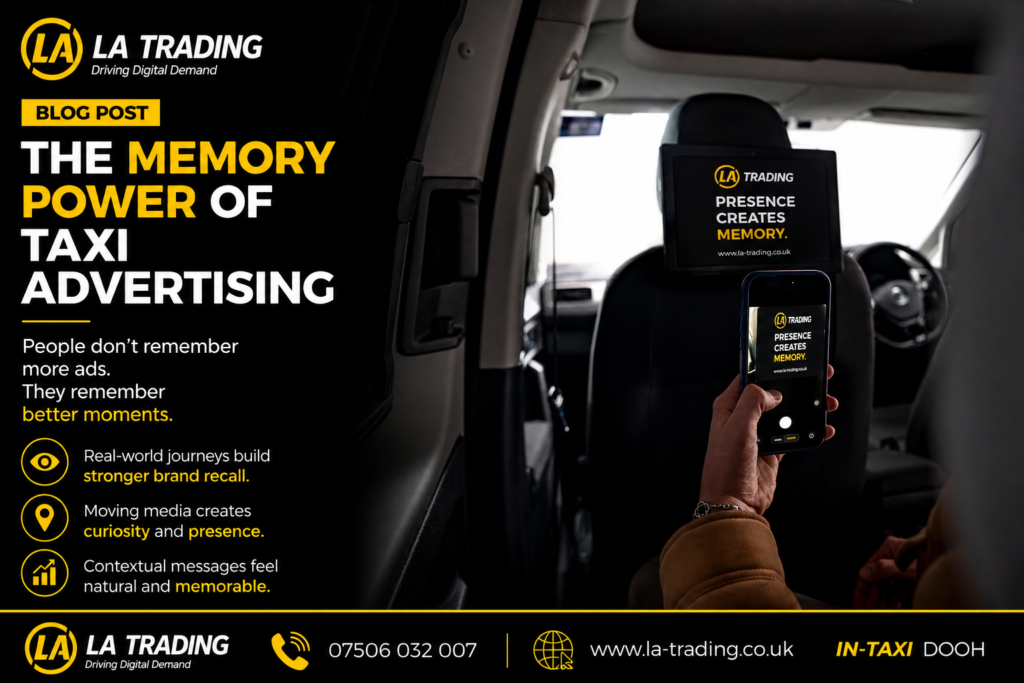
A taxi moving through busy urban environments naturally draws the eye differently to fixed placements. Now add digital screens inside the passenger environment, and suddenly brands aren’t just visible…
They’re present.
That subtle shift matters more than most people realise.
Because presence creates memory.
The “Passenger Mindset” Is a Hidden Opportunity
Here’s something media planners are paying closer attention to in 2026:
The emotional state of the audience.
Inside taxis, passengers are often:
- waiting
- observing
- decompressing
- travelling with purpose
- mentally between activities
That’s a very different psychological state compared to somebody rapidly consuming content online.
And when people slow down, even slightly, brand recall improves dramatically.
It’s one of the reasons transit-based OOH has remained such an important part of modern advertising ecosystems for years.
DOOH Is Becoming More Human
For years, digital advertising became obsessed with hyper-targeting, algorithms, and endless optimisation.
But ironically, consumers started craving something more human again.
That’s why the most effective DOOH campaigns today often feel:
- conversational
- location-aware
- culturally relevant
- emotionally timed
- playful
The best campaigns don’t scream “BUY NOW.”
They create tiny moments people remember later.
Sometimes it’s a witty line.
Sometimes it’s timing.
Sometimes it’s simply showing up somewhere unexpected.
And taxis are full of those unexpected moments.
Why Big Brands Are Paying Attention
Large OOH and media brands already understand the value of layered visibility.
That’s why modern campaigns increasingly combine:
- roadside billboards
- transport media
- retail screens
- experiential activations
- taxi DOOH environments
The objective isn’t repetition for the sake of repetition.
It’s creating multiple touchpoints throughout someone’s actual day.
That’s where taxi advertising becomes incredibly complementary to broader OOH strategies — especially in cities where audiences are constantly moving between locations.
The Future of DOOH Isn’t Louder. It’s Smarter.
Consumers can spot forced marketing instantly now.
The brands winning attention in 2026 are the ones creating campaigns that feel:
- relevant
- contextual
- natural
- memorable
And DOOH gives brands the flexibility to adapt creatively in real time without losing the physical-world impact that makes OOH so powerful.
That balance is becoming incredibly valuable.
Final Thought: The Best Advertising Doesn’t Feel Like Advertising
Nobody wakes up hoping to see more ads.
But people do remember:
- clever moments
- emotional reactions
- humour
- timing
- experiences that break routine
That’s where modern taxi DOOH becomes interesting.
It lives in the real world.
It moves with people.
And unlike most digital ads, it doesn’t rely on interrupting someone to make an impression.
Sometimes the smartest marketing strategy isn’t chasing people online.
Sometimes it’s simply riding alongside them.